FPO cards are printer test cards made by Wizards of the Coast that were never meant to leave the building. FPO stands for FOR POSITION ONLY, which is printed in capitals across the artwork. Wizards ran rare cards through the presses to check the printing before the Expedition e-Reader expansion shipped, sealed them into unreleased packs for internal use, and intended to destroy them afterwards. They reached collectors in 2013 because a former employee kept his set instead.
Why were they printed?
FOR POSITION ONLY is a printing trade term. It marks placeholder material that shows where an element sits on the page without being the final asset, so that nobody downstream mistakes a test proof for the real thing. Printing the words across the art is a deliberate ruin of the card, and that is the point.
Wizards used them to test the rares through the printers ahead of Expedition, then inserted them into unreleased packs so the packaging line could be checked too. Both the cards and the packs were internal tools.
How did they get out?
A former Wizards employee saved a quantity of them from the shredder and kept them in his personal collection. They sat there for more than a decade before he sold them, which is why a set of cards printed around 2001 or 2002 only became known to collectors in 2013.
That single origin matters when you are buying. The population traces back to one person's rescued stock rather than to any distribution, official or otherwise.
How do you identify one?
The obvious marker is FOR POSITION ONLY printed across the artwork in white capitals. Two further details are worth knowing.
The bottom left corner carries the word Medium in small black type, which is a print specification rather than anything to do with the game.

The Charizard is missing HP in the top right corner. This looks like an unintentional error on the test print rather than a deliberate marking, and it is a useful confirmation on that particular card.
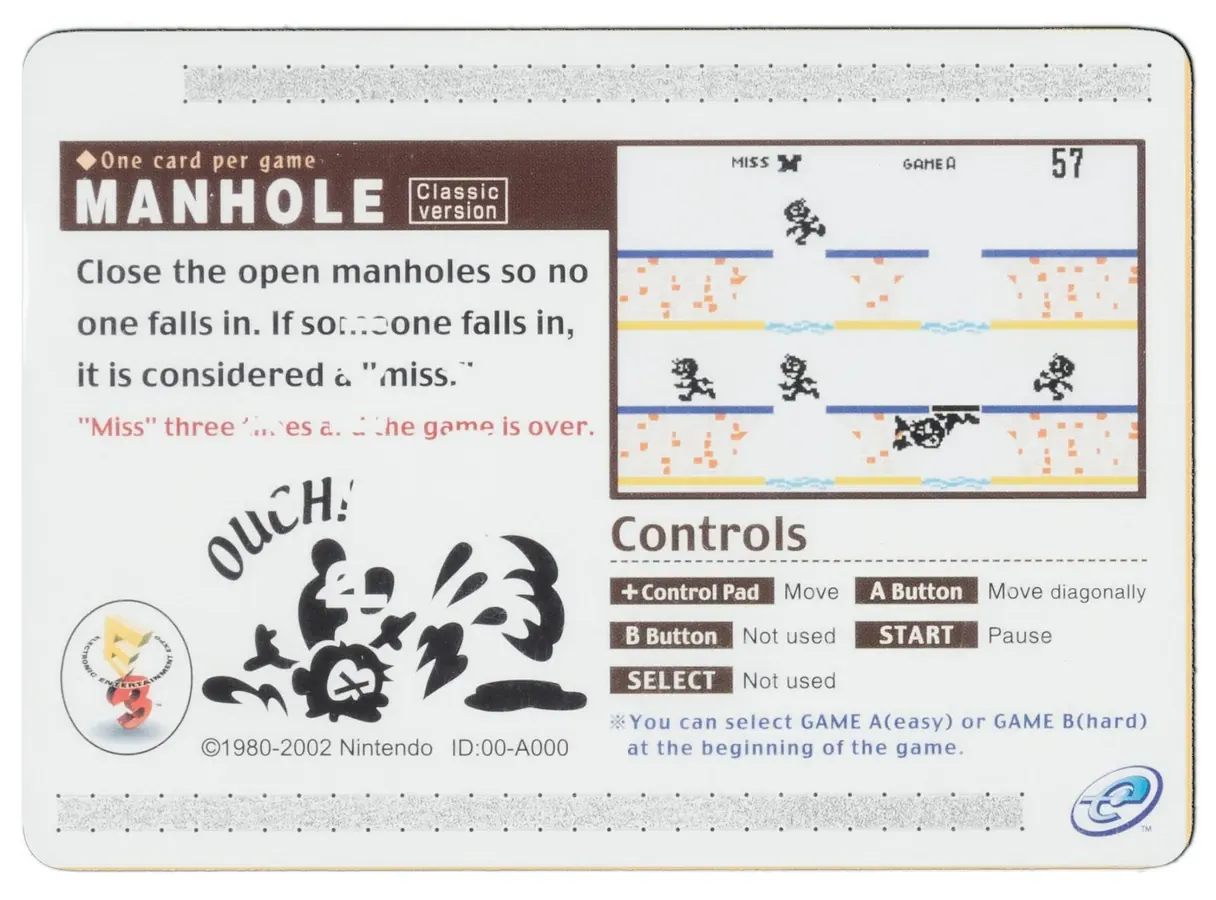
One caution, and it comes with a surprise. Manhole is not a Pokemon card at all. It is a Nintendo e-Reader card for the Game and Watch title of that name, carrying an E3 logo and a 1980 to 2002 Nintendo copyright, which fits a press test run for the e-Reader line that Expedition was built around.
It is also the hardest of the eight to read. The card is mostly white, so white FPO lettering has almost nothing to sit against and only shows where it crosses the darker body text. Published guides describe the artwork as dark, which does not match the card. If you are checking a Manhole from a photograph, get the lighting right before you conclude anything either way.
The Pokemon cards in the group have ordinary Pokemon card backs, which is what you would expect from a press test.
How rare are they?
A community population count published in 2022 documented 227 cards in total across eight designs, seven Pokemon and one e-Reader card, broken down as follows.
- Charizard, 60
- Alakazam, 52
- Blastoise, 32
- Ampharos, 30
- Arbok, 29
- Dugtrio, 10
- Clefable, 7
- Manhole, 7
The person publishing that count noted it was potentially already out of date, so read it as the number known at the time rather than a closed population. Clefable and Manhole are the scarce ones by a wide margin.
Some of the sealed test packs have been opened publicly. Eighteen thin packs, holding five cards each, were opened on YouTube and two more were sold to collectors intact. Two thick packs of ten cards were opened on YouTube, and one further thick pack was opened by another collector.
Will a grader slab one?
This is the part that catches buyers out. PSA and Beckett both stopped grading FPO cards in 2015, on the basis that they were never officially released. CGC began grading them in 2022.
So the market has a gap in it. PSA and BGS slabs exist from before 2015 and cannot be replaced, CGC slabs are the current route, and a raw card cannot be sent to two of the three major graders at all. Factor that into what you are willing to pay, because the usual liquidity argument for grading does not fully apply here.
Are they worth collecting?
They occupy an unusual position. They are not official releases, they are not error cards in the normal sense, and they were not distributed. What they are is physical evidence of how Wizards of the Coast produced Pokemon cards at the end of its licence, which is a genuinely scarce category of object.
That appeals to a specific kind of collector. If your interest is in production history rather than in playable or set-completing cards, FPO cards are one of the few ways to hold a piece of it. If you are buying for resale, the grading situation and the single-source population are both real constraints on the market.
Sources
The details here come from the Elite Fourum guide FPO (For Position Only) Cards Official Guide, including the population count and the grading dates.